Understanding Collagen: Peptide Types, Absorption Mechanism, and Science-Based Skin Supplementation
Collagen has long been one of the most searched keywords in skin care and beauty. Yet two opposing misconceptions persist: some expect drinking collagen to smooth skin overnight, while others claim it is no different from eating regular meat or fish. From the perspective of modern biology and nutritional science, how does the body absorb and resynthesize collagen? Let's explore the science with Lym.
1. The Biological Nature of Collagen and Age-Related Decline
2. Distinguishing Type I, Type II, and Type III Collagen
Nearly 30 types of collagen exist in nature, but within Health & Dietary Supplementsproducts, over 90% focus on 3 primary types:
- Type I Collagen: The most abundant type in the body, densely concentrated in the dermis, bones, tendons, blood vessels, and connective tissue. It plays the primary role in supporting skin elasticity, reducing fine lines, and serving Skin & Personal Protection.
- Type III Collagen: Found alongside Type I in skin, muscles, and blood vessels, helping maintain supple, smooth connective tissue.
- Type II Collagen: Predominantly located in joint cartilage and synovial fluid, acting as a shock-absorbing cushion during movement.

3. Absorption Mechanism: Why Hydrolyzed Collagen Peptides Are Preferred
A common misconception is that ingested collagen molecules travel intact from the gut straight into facial skin. Physiology works differently:
- Native Collagen: Has a large molecular weight (~300,000 Daltons) and a tight triple-helix structure that takes digestive enzymes a long time to break down, resulting in low intestinal absorption.
- Hydrolyzed Collagen (Collagen Peptides): Uses targeted enzymatic hydrolysis to cleave long protein chains into ultra-small dipeptide and tripeptide segments (molecular weight of just 1,000–3,000 Daltons) rich in signature amino acids such as Glycine, Proline, and Hydroxyproline.
- Dual Action of Peptides: Once absorbed across the intestinal lining into the bloodstream, these short di- and tri-peptides both supply building-block amino acids and act as biological signals stimulating dermal fibroblasts to produce new endogenous collagen and hyaluronic acid.
4. 4 Principles for Supplementing and Protecting Collagen Structure
4.1. Always Pair with Vitamin C and Adequate Dietary Protein
Converting Proline into Hydroxyproline to form stable collagen helices strictly requires Vitamin C (Ascorbic Acid)as a cofactor. If the body lacks essential Vitamins & Minerals (especially Vitamin C, Zinc, and Copper), new collagen synthesis stalls.
4.2. Protect Your Skin Barrier from the Outside
Internal supplementation must be paired with external protection. Solar UVA rays are the #1 destroyer of dermal collagen. Alongside sun protection, choose gentle pH-balanced cleansers and moisturizers from our Skin & Body Care subcategory under Personal Care category to keep your natural moisture barrier intact.
4.3. Reduce Refined Sugar and Stay Hydrated
Limit milk tea, pastries, and sugary sodas; instead, choose sugar-free herbal beverages to minimize glycation and premature aging of dermal elastin and collagen.
4.4. Stay Consistent with the Skin Turnover Cycle
Epidermal cell turnover in adults takes 28–45 days. Therefore, nutritional skin support requires consistent daily use for at least 8–12 weeks alongside sleeping before 11:00 PM.
5. Bảng phân loại các tuýp Collagen chính và yếu tố dinh dưỡng đồng hành
Bảng dưới đây tổng hợp đặc điểm phân bố sinh học của các nhóm Collagen phổ biến và nhóm vi chất bắt buộc để cơ thể tự tổng hợp sợi đàn hồi nội sinh:
| Phân nhóm / Yếu tố | Vị trí phân bố chủ đạo trong cơ thể | Vai trò sinh học & Nguồn dinh dưỡng hỗ trợ |
|---|---|---|
| Collagen Tuýp I & Tuýp III | Lớp hạ bì da (chiếm >70% cấu trúc da), xương, gân, thành mạch máu | Duy trì độ săn chắc, đàn hồi của mô liên kết; thường chiết xuất dưới dạng peptide thủy phân từ da cá biển hoặc bò |
| Collagen Tuýp II | Sụn khớp, dịch khớp và đĩa đệm cột sống | Đóng vai trò lớp đệm cơ học giảm ma sát cho ổ khớp khi vận động thể lực |
| Vitamin C, Kẽm và Đồng (Cofactors) | Tham gia phản ứng hydroxyl hóa Proline và Lysine trong nguyên bào sợi | Cung cấp từ cam, ổi, ớt chuông, hạt điều, hải sản và viên uống bổ sung vi chất định lượng chuẩn |
| Lối sống bảo vệ Collagen | Giảm tốc độ phân hủy sợi collagen do tia UV và gốc tự do | Chống nắng vật lý/hóa học, ngủ trước 23:00, hạn chế đường tinh luyện (tránh phản ứng Glycation) và không hút thuốc lá |
6. When to Consult a Physician?
For safe skin care and collagen supplementation, consult a dermatologist or internist in the following cases:
- If you have a history of severe allergy to ocean fish, shellfish, beef, or pork — carefully check the collagen source (Marine vs. Bovine) on the label and consult a physician before use.
- Individuals with kidney disease (requiring strict daily protein restriction) or amino acid metabolic disorders should consult their specialist physician.
- If you experience atopic dermatitis flare-ups, severe cystic acne, sudden hyperpigmentation with menstrual irregularities, or patchy hair loss — see a dermatologist or endocrinologist for medical diagnosis.
7. Nguồn tham khảo
- Harvard T.H. Chan School of Public Health — Collagen — The Nutrition Source (Science, Peptides and Lifestyle Factors): https://nutritionsource.hsph.harvard.edu/collagen/
- Harvard T.H. Chan School of Public Health — Vitamin C — Role in Collagen Synthesis and Antioxidant Defense: https://nutritionsource.hsph.harvard.edu/vitamin-c/
- Viện Dinh dưỡng Quốc gia — Bộ Y tế — Nguyên nhân dễ nổi mụn và lão hóa da khi ăn uống thực phẩm nhiều đường ngọt: https://viendinhduong.vn/vi/article/tin-tuc/nguyen-nhan-de-noi-mun-khi-an-uong-thuc-pham-nhieu-duong-ngot-6ac5a607fe67adfdb40250d4
- NHS (UK National Health Service) — Vitamins and Minerals — Essential Nutrients for Skin and Tissue Maintenance: https://www.nhs.uk/conditions/vitamins-and-minerals/
Gợi ý sản phẩm chính hãng liên quan chủ đề
Các sản phẩm dưới đây đang được phân phối chính hãng tại Lym với đầy đủ thông tin công bố nhãn hàng hóa:
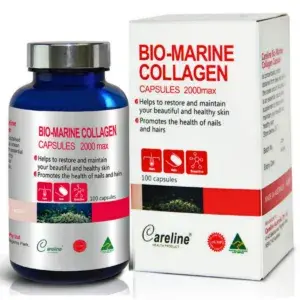
Careline Bio Marine Collagen 2000 mg |100 capsules| Bo sung Collagen chiet xuat tu da ca bien – Ho tro cham soc da/toc/mong [S/P Chuan Australia]
Original price was: 672.000₫.587.000₫Current price is: 587.000₫.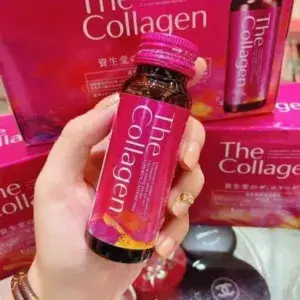
Collagen Nuoc Shiseido Noi Dia Japan – Bo Sung Collagen Tien Loi, Cham Soc Da Tu Ben Trong
Original price was: 1.300.000₫.680.000₫Current price is: 680.000₫.